
Skip to content
Brenner Manufaktur

How something special is made

Every pair of RAINER BRENNER glasses is something special. One reason for this is the elaborate manufacturing process, which is done largely by hand. Here you can see the most important steps in how they come into being.

Frame on the sheet

Only the finest cellulose acetate from the long-established Italian company Mazzucchelli is used as the raw material for a RAINER BRENNER frame. The roughly 1 cm thick sheets are selected individually, as their pattern defines the look of the frames.

Cutting the blanks

In the first step, blanks are milled out of the high-quality acetate sheets — by CNC machine and accurate to a thousandth of a millimetre. The basic shape of the glasses is already clearly recognisable.

Pre-milling the bridge

The nose bridge is pre-milled freehand and without a template, which calls for a great deal of experience. The shape of the bridge is decisive for how well the glasses sit, especially when it is shaped individually for the wearer.

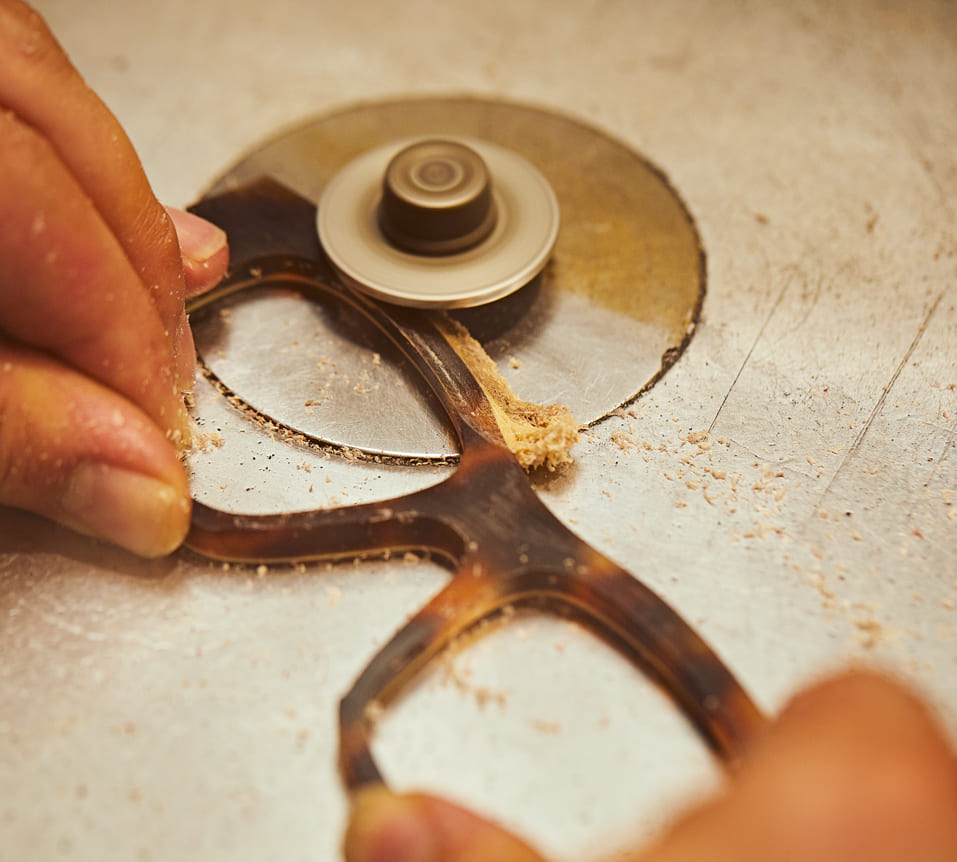
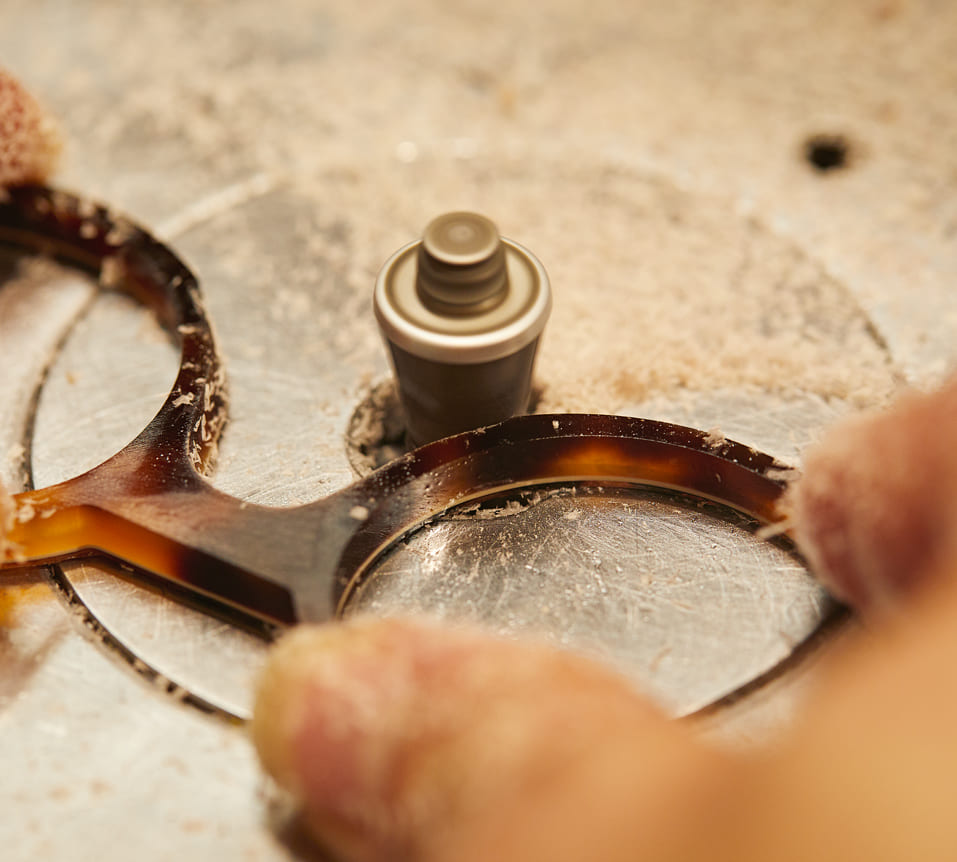
Hollowing out

Using a disc cutter, the central part is brought to the desired thickness — the so-called hollowing out. Depending on the design, varying amounts of material are removed; on subtle models, sometimes only 2.5 mm remains.

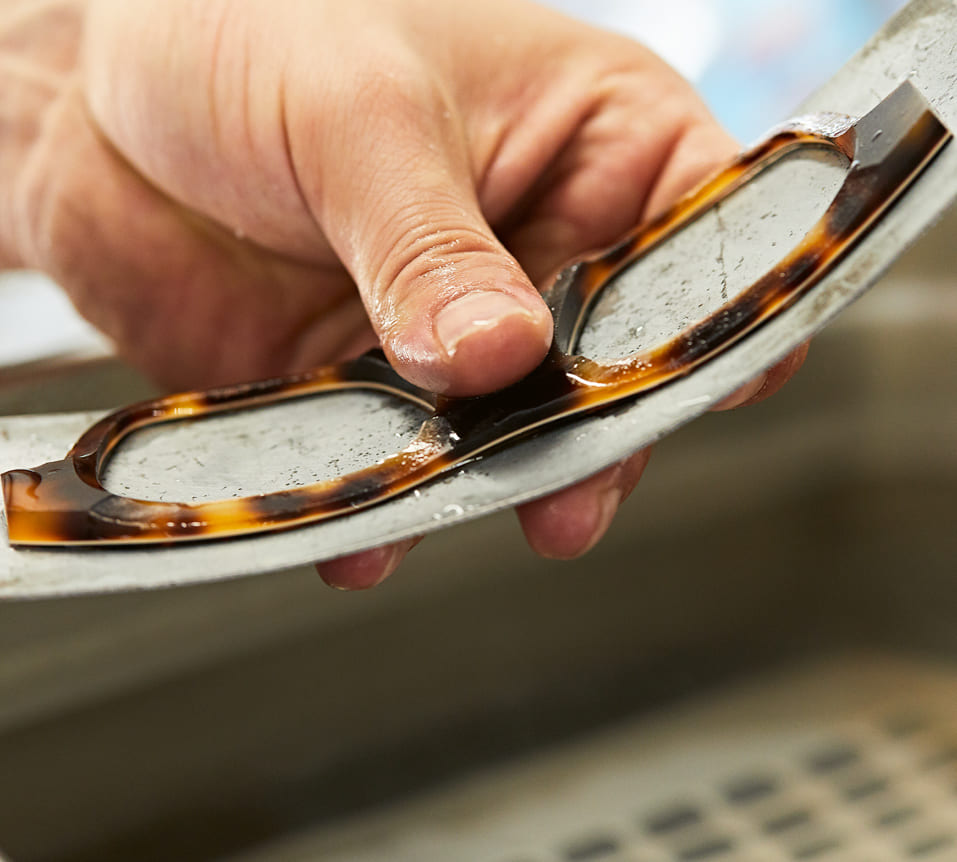
Frame in the water bath

The frame is warmed in a water bath so that it can be worked optimally. With the help of a template it is then given the desired curve, which is decisive both for the look and for a comfortable fit.

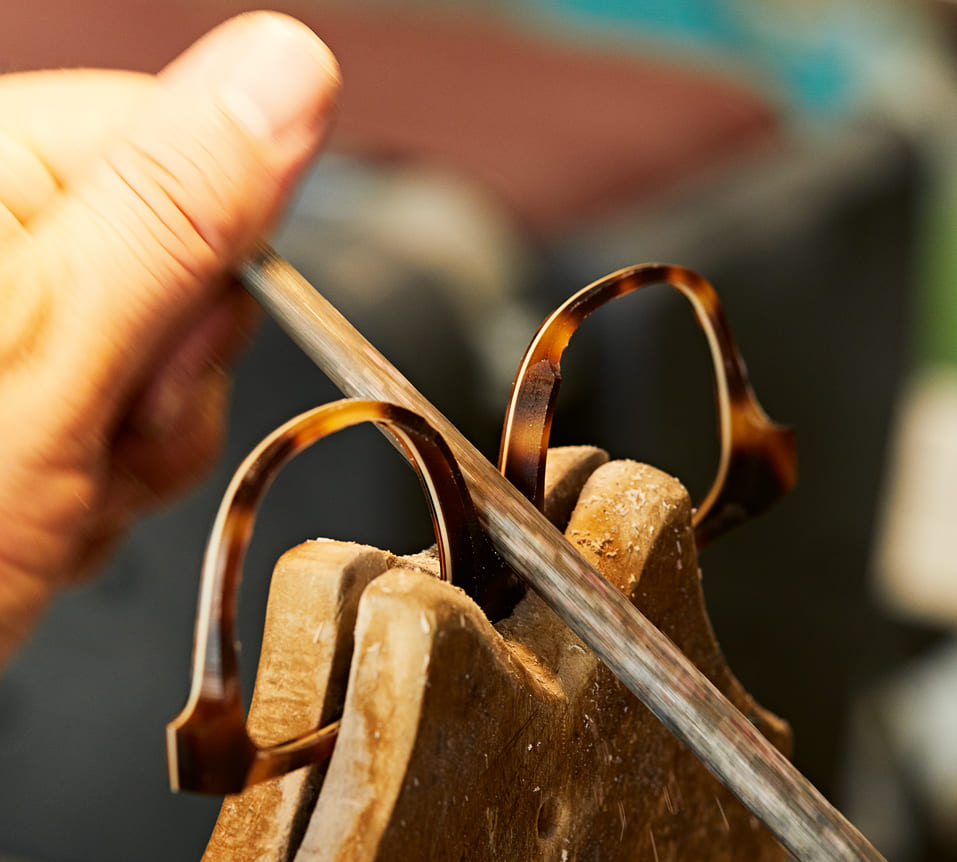
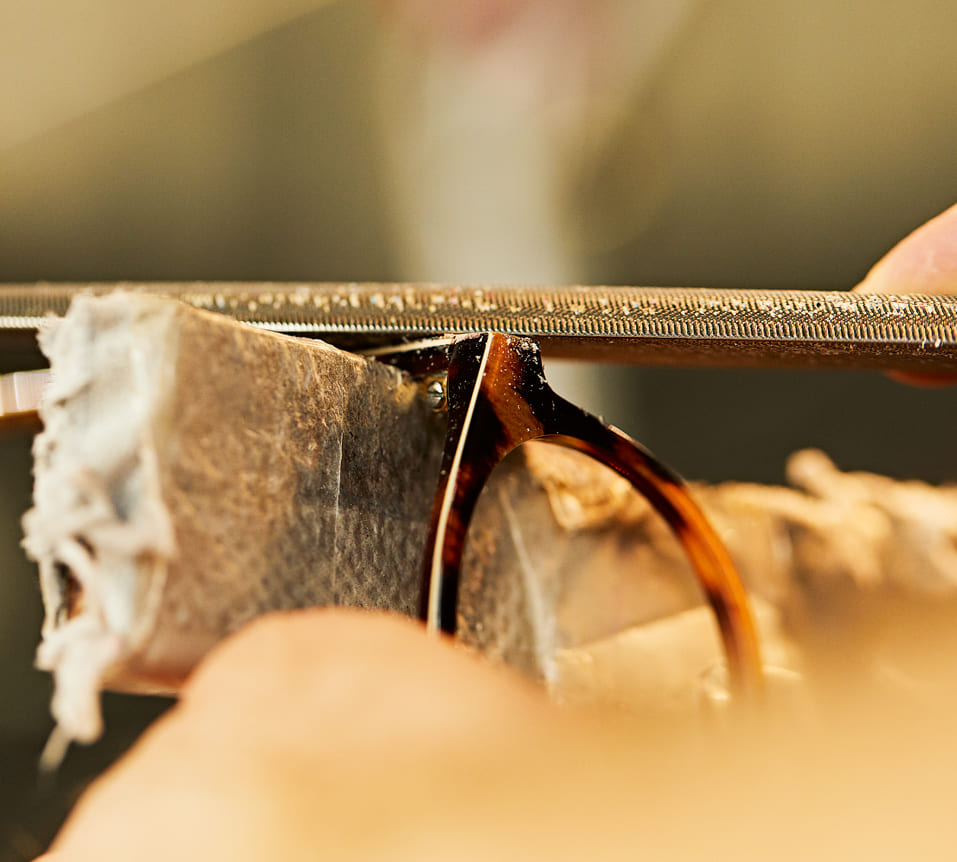
Filing the bridge

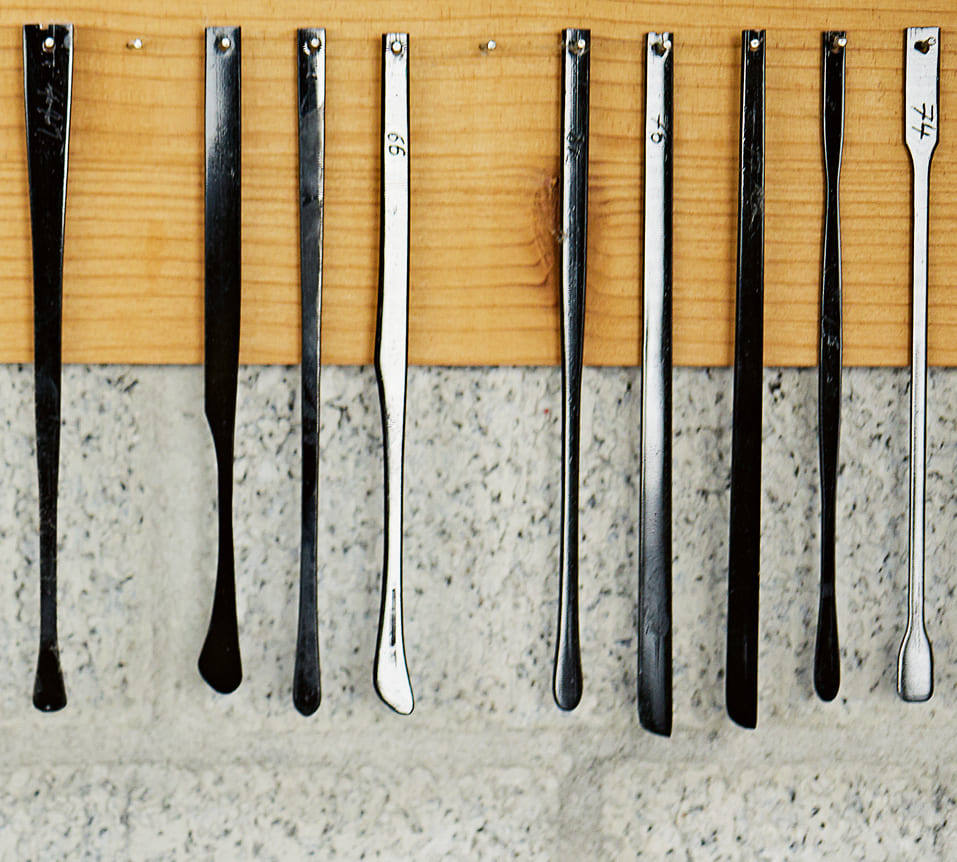
The nose bridge is filed by hand until it reaches its final shape. To ensure the best wearing comfort, up to 10 different files with various grits are used.

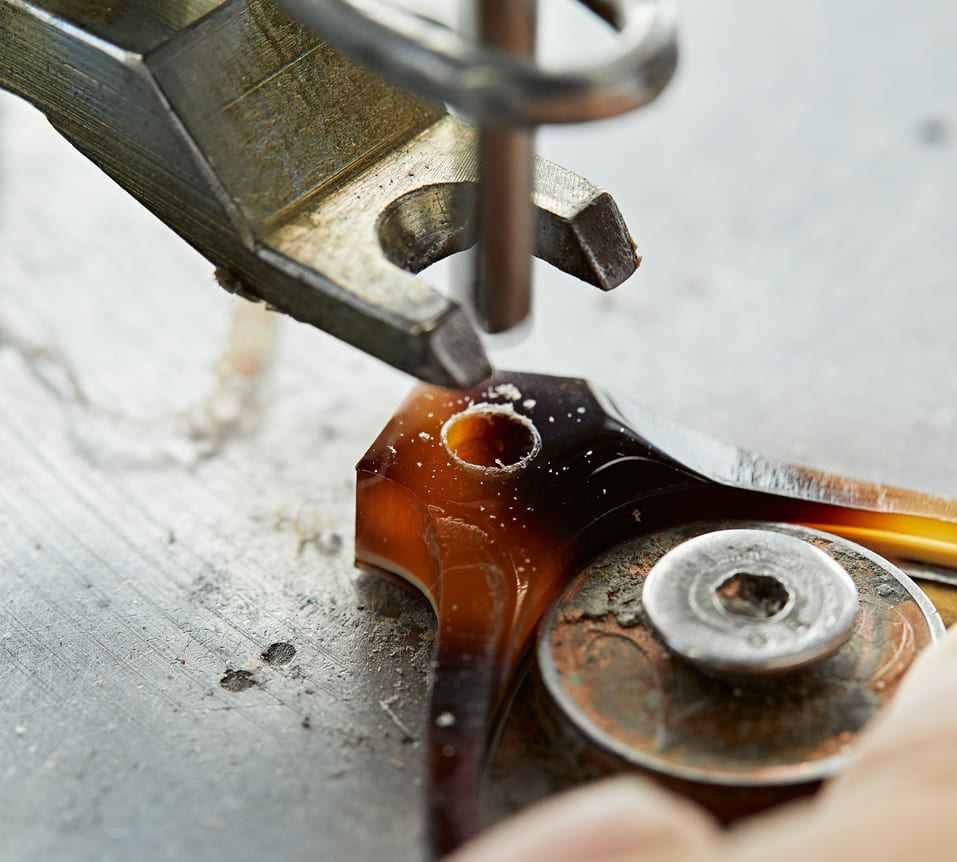
Drilling for the hinges

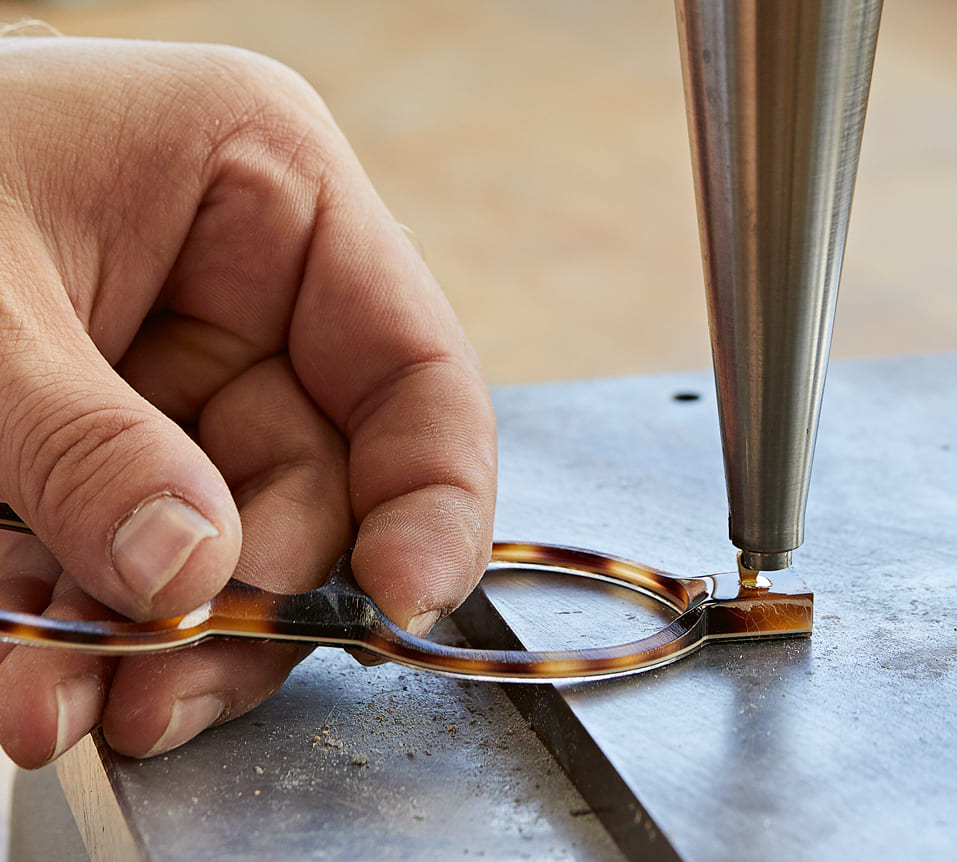
The holes for the hinges are likewise set by hand. Besides the position, the depth of the holes must be exactly right, so plenty of practice and a good eye are needed for the hinges to fit precisely later.

Setting the hinges

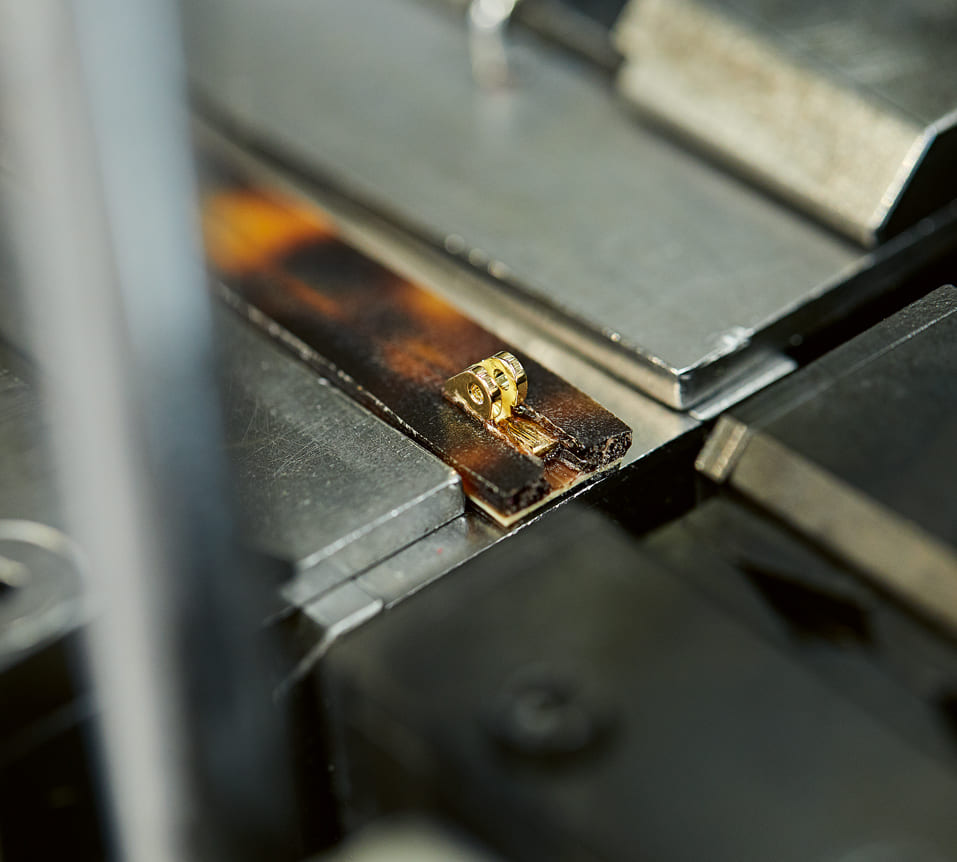
The hinges are first warmed by ultrasound and then pressed in under high pressure. Precisely set, the golden hinges ensure wobble-free comfort and a solid opening and folding action.

Tapering the temples

The temples are first brought to the desired thickness — the so-called tapering — then the counterpart to the hinges, the temple core, is heated to 300 °C and shot into the centre of the temple.

Shaping the temples

The tops and bottoms of the temples are milled to the specified dimensions. The temple core must be positioned with absolute precision so that the two hinge parts later fit together perfectly.

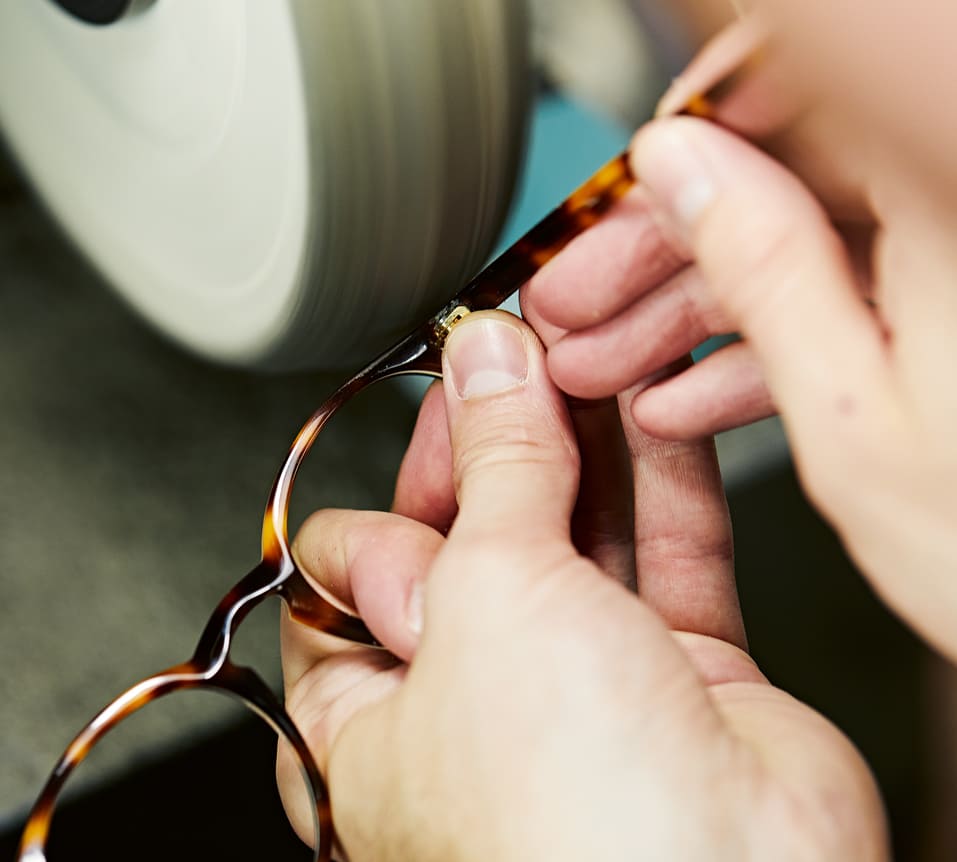
Beechwood polishing

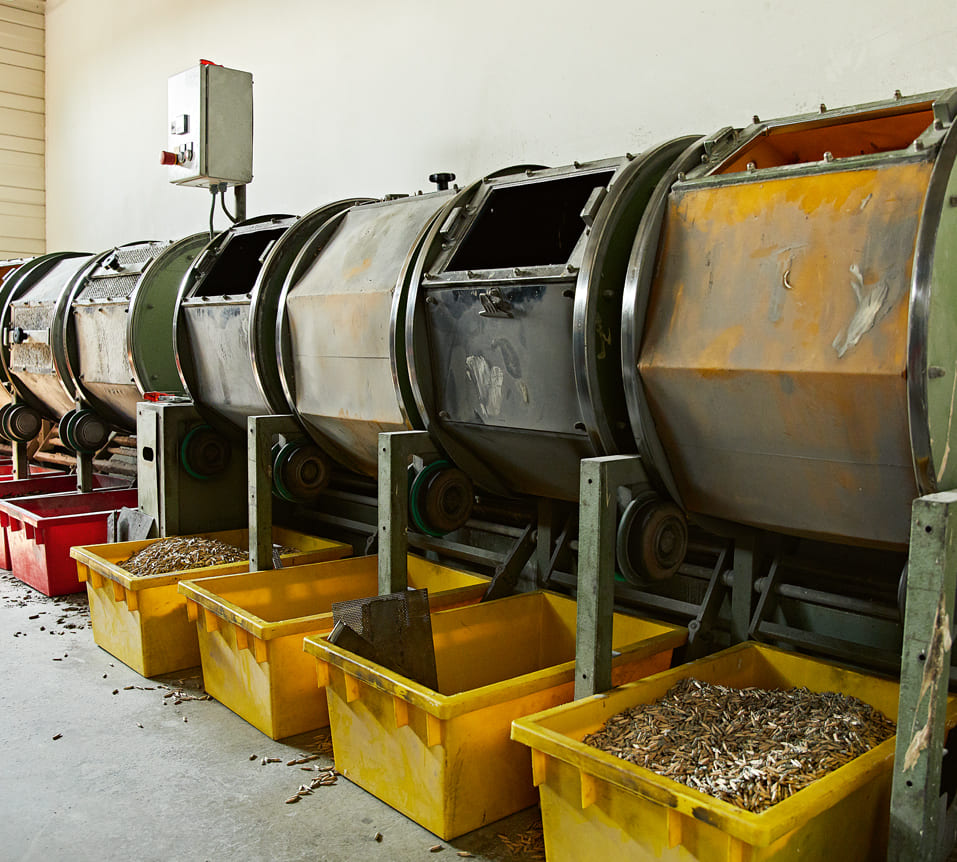
Temples and central parts are ground and polished in large drums filled with beechwood chips. After 4 passes with chips of different sizes and a good 96 hours in motion, they already look glossy.

Filing the mounted temple

The temple and central part are assembled and precisely matched to each other. The temples must sit at a perfect angle on the central part so that the glasses fit optimally and the parts become a harmonious whole.

Finishing

The finishing depends on the look of the frame. For a brilliant high-gloss finish the surface is ground and polished in several steps; for elegantly matte models a sandblasting technique is used.

Engraving + inlay

Then the RAINER BRENNER lettering is applied. It is not simply printed or stamped, but finely milled in, cleaned and filled in by hand with a special wax.

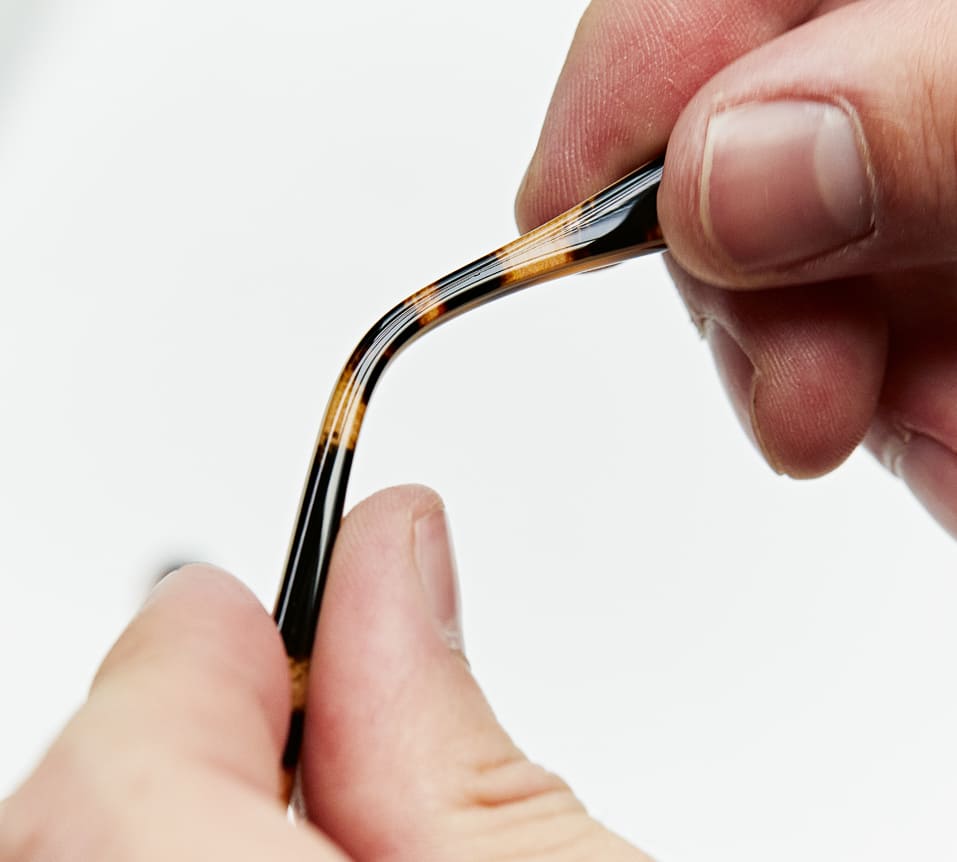
Aligning the temples

To align the temples perfectly, they are heated and then given the desired curve. Now the genuine RAINER BRENNER frame is finished — apart from the fine adjustment in Goethestraße 24, of course.

Subscribe to our newsletter

Even more variety

Of the many things there are to tell about Rainer Brenner, we love to share them in many ways — here on the website, in our brochures, on social media and by newsletter. Sign up and stay in the loop.

Salutation *

You can unsubscribe at any time via the link in our newsletter.